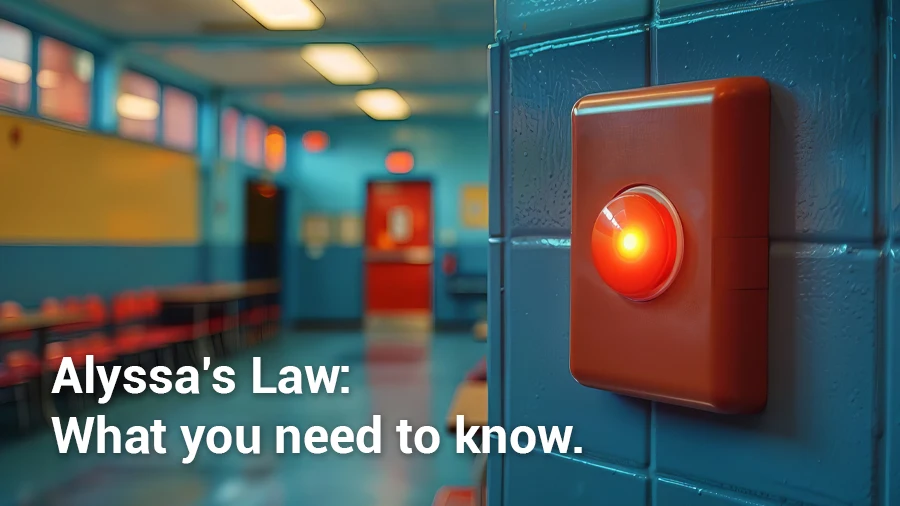
Alyssa’s Law is one of the most important legislative responses to the growing need for faster, more reliable emergency communication in schools. The law is designed to reduce response times during critical incidents and save lives in the process.
We’re explaining what Alyssa’s Law requires, the challenges it solves, and how partnering with the right IT provider can help ensure your organization is fully compliant and prepared.
What is Alyssa’s Law?
Alyssa’s Law is named in honor of Alyssa Alhadeff, a 14-year-old student at Marjory Stoneman Douglas High School, who was one of 17 people killed in a mass school shooting in February of 2018. In the aftermath, her family founded the nonprofit organization Make Our Schools Safe and advocated for legislation to enhance safety and security, including faster, more direct ways to alert law enforcement during emergencies.
The law adopted in multiple states, including Texas, mandates the use of silent panic alert systems in public elementary and secondary schools.
Why Alyssa’s Law Matters
Emergencies can escalate in seconds, leaving school staff little time to reach out to authorities. Alyssa’s Law can help eliminate gaps in traditional communication methods, such as calling 911, notifying administrators, or using disconnected systems. These systems integrate with existing infrastructure and are designed to improve response time in schools.
What Are the Requirements of Alyssa’s Law?
The key components of Alyssa’s Law include:
- Silent panic alert buttons must be in every classroom
- Silent panic alert systems must directly send notifications to law enforcement
- Establish direct connections with local law enforcement and other first responders
- Panic alarms must be able to be activated quickly and discreetly to avoid escalating situations
- Offer digital maps and walkthrough access for first responders
- Reliable connectivity so that systems function across different areas of school campuses, including outdoor areas
- Integration with existing communication systems, where possible
Compliance Timeline and Consequences
The deadline for Texas schools is the 2025-2026 school year, which is quickly approaching. Implementing panic alert systems is not an overnight process but instead requires evaluating existing infrastructures, selecting the right vendor, coordinating installations and training staff. Schools that fail to meet requirements by the designated timeline may face a loss of grants and funding, penalties and increased risk during emergency situations.
Compliance isn’t just about meeting a legal mandate but about demonstrating a commitment to student and staff safety.
Partnering with an IT Provider to Ensure Compliance
Computer Solutions is a trusted IT provider and installer of communication systems across Texas. Our team understands the challenges of educational environments and works closely with school districts to consult, audit, design, install and manage custom IT solutions and systems.
To get started, we recommend the following questions:
- Does your current collaboration platform support emergency and mass notifications?
- Are all emergency communication components compliant?
- Can alerts reliably reach law enforcement via secure, reliable connectivity?
- Is staff properly trained on how to activate alerts and respond during an emergency?
- Are your communication and collaboration tools fragmented across vendors or systems?
If you’re unsure whether your current systems meet Alyssa’s Law requirements, Computer Solutions can help. Contact our team today to schedule a free consultation to review your compliance standing.